Trading Type
Spot
Trade crypto freely
Promotions
Solana has long emphasized both high performance and network security as central components of its blockchain architecture. As more decentralized applications, financial protocols, and digital assets are built on the network, maintaining robust security standards becomes increasingly important.
Recognizing these growing demands, the Solana Foundation has introduced a series of initiatives designed to improve the ecosystem’s security framework. These efforts focus on providing development tools, establishing standardized security assessments, and strengthening the coordination mechanisms used when responding to security incidents. The goal is to ensure that security considerations are integrated into application development from the earliest stages.
Within the Solana ecosystem, several major protocols have already invested significant resources in auditing and validating their systems.
For instance, the governance platform Squads Multisig has undergone more than ten independent security audits and has implemented formal verification methods to validate aspects of its code. The lending protocol Kamino has also completed multiple external audits, reflecting a similar emphasis on security evaluation.
Another example is Jupiter Lend, which has passed formal verification procedures and completed several audits, with security-related information publicly available through transparency dashboards. In addition, some large-scale protocols managing billions of dollars in assets have continued to expand their security infrastructure as the ecosystem grows.
These efforts reflect a broader industry reality: as blockchain networks expand, the sophistication of potential attackers evolves as well, requiring more comprehensive defensive strategies.
(Image source: Asymmetric Research)
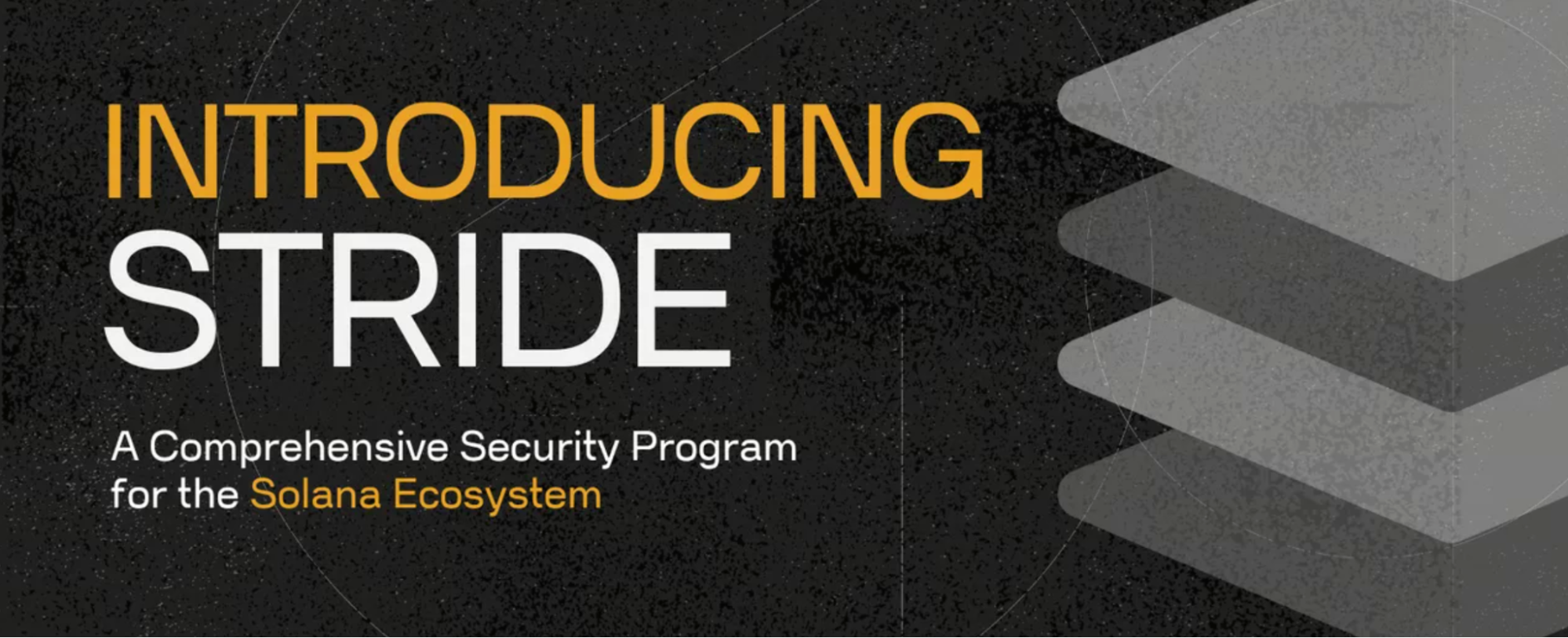
To further strengthen security practices in decentralized finance, the Solana Foundation has partnered with Asymmetric Research to launch the STRIDE program, short for Solana Trust, Resilience and Infrastructure for DeFi Enterprises.
STRIDE is designed as a comprehensive security evaluation initiative focused on DeFi protocols operating within the Solana ecosystem. Through this program, participating protocols undergo structured security assessments conducted by independent researchers.
The framework developed by Asymmetric Research evaluates protocols across eight security pillars, examining areas such as infrastructure resilience, operational security, and smart contract design. After the review process is completed, the results are published in a public database of security reports.
By making these assessments accessible, the program aims to provide users, investors, and developers with clearer information about the security posture of different protocols.
STRIDE also introduces different levels of protection depending on the total value locked (TVL) within a protocol.
Protocols managing more than ten million dollars in assets may receive continuous operational security monitoring if they successfully pass the evaluation process. This support includes ongoing threat detection systems and monitoring designed to identify suspicious activity before it escalates into a larger incident. Funding for these services is provided by the Solana Foundation.
For protocols with more than one hundred million dollars in TVL, additional support may include formal verification of smart contracts. Formal verification uses mathematical methods to examine every possible execution path of a program, helping ensure that contract logic behaves correctly under all potential conditions. This technique is widely regarded as one of the most rigorous approaches to validating software reliability.
In addition to preventive security measures, Solana has introduced a collaborative incident response initiative known as the Solana Incident Response Network (SIRN).
SIRN is a coordinated network of security researchers and cybersecurity firms responsible for responding to security incidents affecting the ecosystem. The network focuses on sharing threat intelligence, coordinating responses to ongoing attacks, and improving defensive strategies across projects.
Founding members of SIRN include security organizations such as Asymmetric Research, OtterSec, Neodyme, Squads, and ZeroShadow. While the network is open to all Solana protocols, priority support is generally directed toward projects managing larger volumes of assets.
Over the past several years, the Solana Foundation has also developed and supported a variety of security tools intended to assist developers. Most of these resources are freely accessible to teams building applications within the ecosystem.
One example is Hypernative, which provides institutional-grade monitoring infrastructure capable of detecting potential threats and preventing malicious transactions before they are executed. The system became available to Solana developers in September 2024.
Another platform, Range Security, offers real-time risk monitoring across wallets, multisignature accounts, and blockchain programs. Developers can access a limited number of free API requests each month to analyze potential security risks.
Additional tools include Riverguard, developed by Neodyme, which simulates attack scenarios in order to identify vulnerabilities before they can be exploited. Sec3 offers an automated static analysis system called X-Ray that scans code for security flaws, while also providing free consultation sessions for Solana projects.
AuditWare Radar further supports developers by enabling them to create and share security testing templates, making vulnerability detection easier during the development process.
Beyond internal ecosystem initiatives, the Solana Foundation also participates in broader industry collaborations aimed at combating cryptocurrency-related crime.
One such initiative is the Crypto Defenders Alliance, a cooperative network involving exchanges, blockchain projects, and cybersecurity organizations. The alliance focuses on preventing digital asset fraud, cryptocurrency theft, and the laundering of stolen funds.
Members collaborate by sharing threat intelligence, developing open-source tools, and establishing best practices that improve the overall security of the digital asset industry.
Despite the wide range of tools and resources provided by the Solana Foundation, the organization emphasizes that the primary responsibility for security remains with individual protocol teams.
Projects that manage substantial user funds are expected to maintain rigorous security standards and implement appropriate protective measures. The foundation’s tools are intended to assist development teams in strengthening their defenses, but they are not designed to replace internal security practices.
As the Solana ecosystem continues to grow, maintaining strong security infrastructure has become essential to the network’s long-term stability. Through initiatives such as the STRIDE evaluation framework, the Solana Incident Response Network, and a suite of developer security tools, the Solana Foundation is attempting to build a more comprehensive security environment.
These efforts aim not only to safeguard user assets but also to support developers as they design and deploy increasingly complex decentralized applications. By combining preventive assessments, real-time monitoring, and coordinated incident response, Solana is working to ensure that ecosystem growth can occur alongside robust and resilient security practices.
* The information is not intended to be and does not constitute financial advice or any other recommendation of any sort offered or endorsed by Gate.
* This article may not be reproduced, transmitted or copied without referencing Gate. Contravention is an infringement of Copyright Act and may be subject to legal action.
Share
Content